Unit 1 Entrepreneurship · Free revision notes
1.1.1 Being an Entrepreneur
Last updated 20 February 2024 · ~3 min read
Entrepreneurs are the people who start their own businesses or enterprises. Entrepreneurship is a skill and entrepreneurs take calculated risks with the aim of some form of reward. This is often in the form of profit, but it could also be in the form of feeling good or having the satisfaction of running your own business and being your own boss.

Entrepreneur — a risk taker who starts their own business or enterprise to make a profit or for ethical reasons.

Entrepreneurs will look for opportunities to launch a new product or service, this is known as a gap in the market.
The roles of a successful entrepreneur:
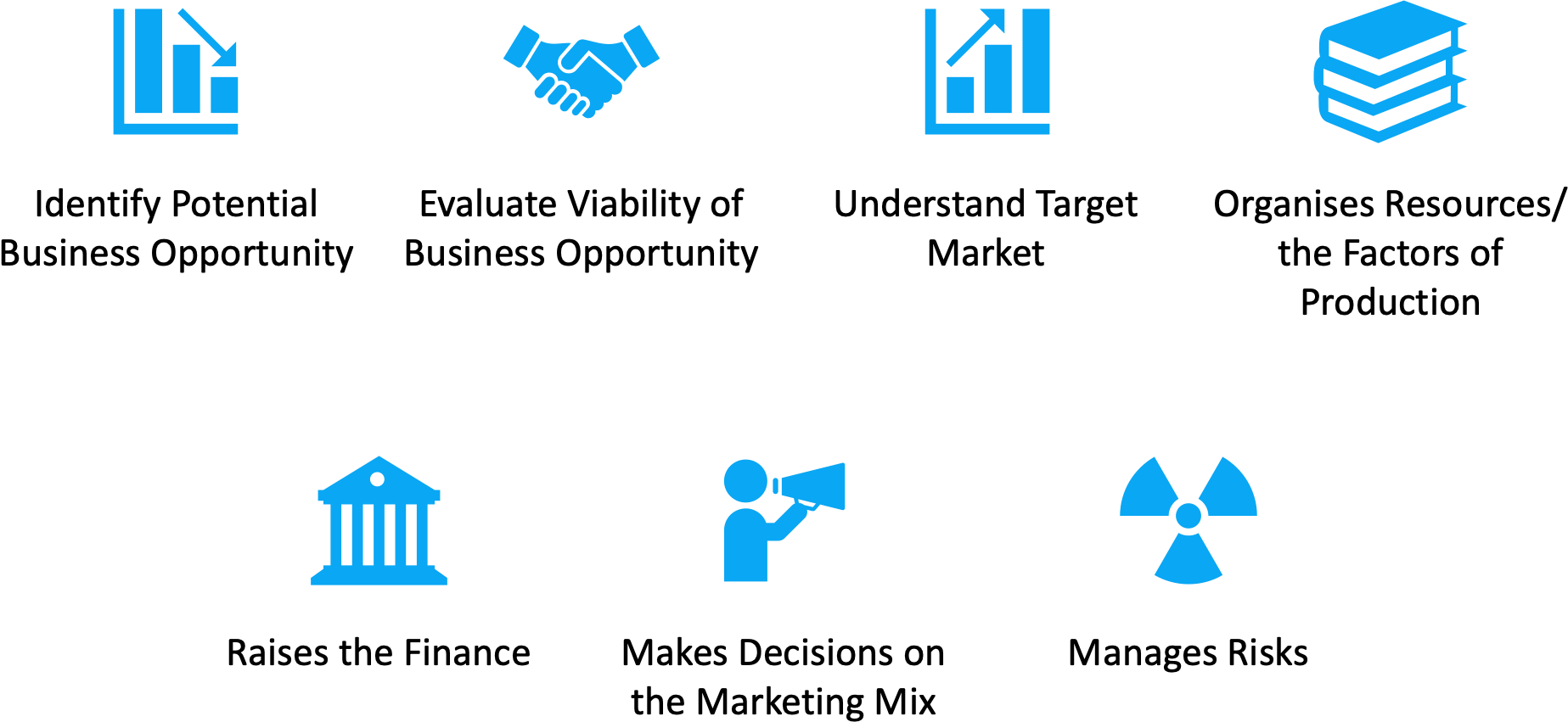
Identify Potential Business Opportunities
Successful entrepreneurs will constantly be looking for opportunities to start a business. Sometimes inspiration may strike and it is the entrepreneur's responsibility to take an idea and put it into practice. Did you know that Simon Cowell came up with the idea for X Factor while walking home because he couldn't afford a taxi? Monopoly was initially drawn out on a napkin. The founder of Zoom, Eric Yuan, had to apply 9 times to get a U.S. visa before starting his company. Being an entrepreneur is about pursuing your ideas and dreams and overcoming adversity.
Evaluate the Viability of Business Opportunity
Viability means the likelihood of success. Entrepreneurs can reduce risk by ensuring that the business idea is viable through market research and careful planning.
Understand Target Market
The target market is the customer base that the business's product or service is aimed at. For example, a nightclub may target university students with cheap drink offers, whereas a London bar may choose to target professional city workers with more expensive brunch offers.
Organises Resources/The Factors of Production
Business resources are limited, therefore it is important to manage them properly to receive the most gain from them. Factors of production are what are needed to create a product or service. A successful entrepreneur will manage these inputs so that they can add value and sell the output for a profit. For example, a baker will take flour, eggs, butter & sugar (inputs), mix & bake them (adding value), and sell the cakes (output). An entrepreneur must be able to manage the resources in such a way that it is profitable and reduces waste.
Raises The Finance
A successful entrepreneur will raise the sources of finance needed to start their business.
Makes Decisions on The Marketing Mix
The 4Ps of the marketing mix are Price, Place, Product and Promotion. These are the 4 elements that businesses must consider to successfully market their product. A successful entrepreneur will make calculated decisions based on evidence gathered from market research.
Manages Risks
An entrepreneur takes risks to start a business. This could be financial, quitting a job to start a business or the time spent. While risk is part of being an entrepreneur, they can take steps to reduce it and ensure that the reward for running the business is more likely.
Test yourself
There is a quiz for this spec point in the Revision Ninja course, with instant feedback and an explanation on every question. You need an account to open it.
More in Unit 1 Entrepreneurship
- 1.1.1 Being an Entrepreneur
- 1.1.2 Entrepreneurial Motivators
- 1.1.3 Entrepreneurial Skills and Attributes
- 1.2.1 Reasons for Aims and Objectives
- 1.2.2 Financial Aims and Objectives
- 1.2.3 Non-Financial Aims and Objectives
- 1.3.1 Legal Structures
- 1.3.2 Structural Characteristics
- 1.3.3 Restructuring
- 1.4 Stakeholder Engagement